Don't micromanage your AI
I was on People Who Know Things with Molly Berg. Molly is an AI strategist, and her show is about learning AI through the people who are living it. We got into the rollout at Airbnb, why the company is called Friendly, and why I want to work on a farm and stay out of the factory. At one point she worried she'd turn into an AI micromanager, which is where the title comes from. Here's the conversation, lightly edited.
How I got here
Molly: Mike, so excited to have you on the podcast. I would love if you could start by giving us a little bit of an overview about your background, how you got into AI, and what you're doing today.
Mike: I'm one of those people that keeps turning around and going, "Boy, I don't know how I got here. This is different." I started as a web developer when I decided to leave college in my fifth year. It felt like it was just time to disassociate from it. That was when the financial crisis happened and there were no tech jobs, so not the best decision on my part.
I worked as a web developer for the first five years of my career, before this whole mobile thing became really popular. I saw everyone was really ahead of me in web development and back-end development, and mobile was new and shiny. I remember the day I went to Reddit and typed in, "Does iOS or Android pay more money?" And it said, "Both are the same, but Android doesn't make you pay Apple 100 bucks," and that was it, I was off to the races. Most of my career I worked as an Android developer. I kind of bounced around between startups and big companies, and eventually I ended up at Airbnb, where I was leading mobile testing.
It was right when AI became less of this fad and crazy witchcrafty thing and more of, "Hey, this is something we should use in enterprise." I interviewed to be the tech lead of a new team called Dev AI, developer AI, which did not exist at Airbnb before. It didn't exist anywhere at the time. It seems like no one really knew what it was, and I got the role. So I spent a little over two years effectively teaching Airbnb engineers a new way to code. On my third day I said there was this weird thing called MCP we should adopt that just came out today. Luckily that worked out, or else none of this would've worked out past that. It was really cool seeing folks go from editors and autocomplete with Copilot, to maybe plugins where it's in the IDE, to Claude Code coming out and Cursor, and folks going to CLIs and that whole craze. Now we're going to more desktop apps and maybe some web-hosted agents. It was absolutely incredible.
So I kind of saw it go from 5% to 98% adoption. We've said that as a company we started developing software 80% faster than before, which was really, really cool to see and to have a part in.
At the tail end of it, I was working on a platform to take coding off laptops. You can just do more, the same way as a browser, where you have multiple tabs. We take it for granted. You don't have to run a shopping app and a banking app. You just go to their website. So I'm trying to do the same thing for AI and coding agents now.
I founded a company, Friendly AI, where we have our first product, Hive, coming out soon. Generally I want to do what WordPress or Heroku did for hosting. Some people want the raw experience, but I think most are going to want something a little friendlier, and I want to fill that gap and get everyone really excited that you can use AI. You don't have to be afraid of it. You can put it somewhere where it delights you and doesn't make you worried every day.
The rollout at Airbnb
Molly: Love that. Can you share a little bit more about how the AI rollout actually started at Airbnb, and what it looked like by the time you left?
Mike: Without getting into too much detail, I think we took a really humanistic approach as a company. Many others had forced adoption and said, "You have to use a particular tool," or, "We have to hit certain numbers," and those types of things didn't happen at Airbnb.
I think it was a lot of learning. We worked together. My favorite stuff was efforts that were like mini conferences, or just bringing folks together, or smaller Slack channels. We're all humans. We all learned to code. It was really hard to have to learn to read, to have to learn to code, and I think this is as big a thing, that you're now learning to work with AI. It's a tool, but you have to realize that everyone is going to do it a little bit differently.
Molly: Yeah. It's a huge learning curve.
Why "Friendly"
Molly: I want to spend a little bit of time talking about Hive. Before we get into that, why the name Friendly?
Mike: I had a past company called Friendly Robot when I had an Android consultancy, and it was kind of like the friendly consultancy. But in general I think it's the mission of it. I don't want to be the fastest or the cheapest. I want something that people associate with being kind and friendly, something that you want to open, something that is helping you, and it felt like a nice fit. I see some other companies making analogies with factories and workflows, and I just don't want to be in a factory. I want to be on a farm. I want to be in a hive. I want to be somewhere where you're coexisting and co-working with others, whether they're organic or machines. I think what we're doing is too messy to call it a factory. I don't want to walk into a factory every day.
Molly: Yeah, I'm picturing cozy Animal Crossing vibes.
Mike: I love it. That's going to be our new UI.
Molly: There you go. I saw somebody who did that, who turned their agents into little people walking around in different spaces. They could go and talk to them and ask them what they were doing. It was a very fun interface.
What Hive is
Molly: So tell me a little bit about Hive. What was the vision behind it? Where are you at right now, and what are the next steps you're looking at?
Mike: One of my jobs at Airbnb was to evaluate platforms like this, or just to evaluate AI tooling. I think they gave me the job because I have that Goldilocks kind of feeling of, oh, it's all too big or too small, and you kind of need that eye to find just right. And there was this one just right that we could not find. We weren't the only ones. It was Stripe, it was Uber, it was Netflix, it was Ramp, it was companies our size that were building these platforms to coordinate agents. Agent is a silly word that's big. It's to coordinate prompts, to coordinate sessions, to coordinate conversations, and it's no different than coordinating documents or chat channels or other forms of communication we've had.
What I noticed while working at Airbnb is that the shape of it is very different than what I initially thought it would be, and also it's just very hard to get folks to use the same thing. Not everyone even wants to use an IDE. So what I want to do is something closer to an Apple ecosystem, but for AI. I don't want 90% of the market. I don't want to be Windows. I want to be Apple. I want it to be to the point where you can pick up your phone and talk to your agents. I want them to be the agents you actually talk to, whether it's Codex or Claude Code or OpenCode. I want you to be able to run it on our servers, or for it to be on your laptop like OpenClaw does. Maybe you want to do it through our UI. Maybe you want to do it through the actual Claude Code and Codex UI and just connect to us and use us as a back end, as an orchestrator.
So how each person works is going to be really different. But without having all of those parts it's, one, at an enterprise level, horribly difficult to convince everyone to move to this new thing. Particularly as Hive might be what we're moving to this year, and next year it's going to be something else. The other side of it is when you're an individual just hitting the market and being told everyone is going to want to do this one thing. I think we're going to try to do it differently. We're going to try to meet developers where they are, have lots of integrations, but fundamentally have a good foundation, and have something in the $10 to $20 range, not in the $200 to $500 range, so that you can use it and not feel like you're going all in on a single platform or a single lab.
To say it a different way, and I know it's cheesy, I'm kind of pouring my heart and soul, and my workflows of how I think someone could be successful and have fun with AI, into a platform.
Molly: You mentioned that it was hard finding what the just right was in this space. What do you think makes it so challenging for companies to find that, with where we're at right now with agentic AI?
Mike: I think saying agentic AI is kind of the whole owl. It's a lot. Do you want agentic AI for research, for planning, for debating, for review, for coordination, for alerting? Each one of those may have a slightly different shape. Maybe some of those you want to do from an IDE, others you want to do through an API, and others through a CLI, where you're coding. I think that's one of the difficulties of it.
Specifically for me building products, what I didn't realize is that a huge percentage of folks that wanted to use these remote environments wanted to use them for migrations, like 30% to 40%. It wasn't for coding and putting an idea into it. It was, "Hey, I have to update React, and it's going to be thousands of PRs to hundreds of teams. How do we coordinate that within a system?" They already had their own tooling for this, but they were doing it on their laptops. The part they were missing was maybe a very small part of the platform. But having the extensibility, being able to tell them, "You can use your own clients, here's just an API to do it," kind of showed, holy moly, they're impactful. They're able to do work without having to do it in VS Code, do it in a tab, do it exactly the same way that you may want to do other experiences.
Molly: I feel like we use terminology right now in AI where we put everything into massive buckets of just AI and agents. And it's like, okay, well, that is 40 different things you're actually talking about, and they all have different requirements and different paths and different upskilling and different tools and infrastructure.
Mike: Yep, exactly. And at the end of the day it's people that are using them, and they have all their own idiosyncrasies.
Meeting developers where they are
Molly: Speaking of the people, you mentioned migrations as a use case you weren't expecting. That is, I feel like, a people use case, because people spend a lot of time on that and it's a huge time saver. Earlier you also mentioned that, both in your previous roles and now with Friendly, you are trying to meet developers where they are. Can you share what that looked like at Airbnb during rollout, and what that looks like within your own product now?
Mike: The best example, and it kind of works for both, is something as simple as developers use GitHub. They see that their PRs are failing in GitHub. Sure, they can paste that URL into a different application, but ideally they should just be able to @ tag, like @Friendly, @Hive, @whatever, and tell it to fix the PR. Now, that might give them a link into a different system, but they shouldn't have to do that context switch on their own and have that friction there. So I think it's a lot of things like that. It's the Slack integrations, the GitHub integrations, putting it in Jira, making sure that PagerDuty is triggering and going into here automatically. The other way is trying to change behavior: "We have our own CI. You have to use our code review tools. This only works if you use our chat." Then you're trying to solve AI problems and human behavior problems at the same time.
Molly: I feel like behavior change happens a lot easier when it's happening in a space that somebody's already in and already cares about, and when it's automated for them too. One of the things we talk about with different training efforts is, okay, can I just make usage of this thing automatic for the person, instead of them having to actually do something to use whatever it is we're trying to get them to use?
Mike: Yep. Absolutely.
Molly: And what are the things you are building into Hive that follow those same principles?
Mike: The next step of this is, now you have everything connected. You have GitHub, you could add Hive there, and in Slack. It's super easy for you to fire off a new session. You have your migration tools and they're fanning out. You give them one example, and now they're like, "Okay, cool, I can now do this in every module and change the version everywhere in the header." And then you hope that it's all going at a pace that works and doesn't bottleneck you at the end of every day, week or month.
So that's what we're building right now and what we're focusing on. More of the coordination, because you're now working at a scale that is so much greater than before. Before, you'd be able to say, "I have one PR, or five PRs at most, in flight, and I can remember what they are." I can't tell you what I did today, because I've had over 80 PRs already land and it's 2:00 PM. So you need tooling for it. You need dashboards. You need coordinators. You need procedures that do cleanup. You need things that tell you that certain things need to be reviewed and others are fine to just auto-roll out. You need something that's looking at your production system and automatically rolling back, knowing what the AI did, and saying, "Oh, this shouldn't have happened, our engagement numbers went down."
We're working on all of that, and it's kind of the next scaling of it. Last year I heard Anthropic engineers, particularly Boris, say, "We're shipping 10 PRs a day," and I was like, "That's crazy." Then six months ago he was like, "We're shipping 100 PRs a day," and I'm like, "That's crazy." And at the time I was shipping 10, and I'm like, "Oh, maybe it's not that crazy, where this is going." Everyone is going to be shipping 10 to 100 PRs next year, and we need to start solving the problems of the cognitive load of it, the organization of it. CI, too. We as a company can't use GitHub Actions, as it's over $100 a day for us and we're two engineers. So being able to do things in a way where you can control throughput, or pipe things together, or organize things so it's working efficiently, is sort of the next frontier that we're working on.
Eight gates down to two
Molly: I think this is a problem that a lot of people are struggling with too. When you go from 10 PRs a day to 100 PRs a day to who knows what it's going to be a few years from now, a lot of people are struggling with where we keep the human in the loop, because now humans are becoming the bottleneck to some extent. What has worked for you, and are there things that have failed, where you have chosen to automate versus not automate, where you've chosen to let it loose or put automated checks in place?
Mike: I absolutely love this question. At a high level, this is going to be different for every single person, the way that it's different who locks their front door, their windows, their bathroom, their bedroom door. It's all about whatever your comfort level is with something new, novel, or something that we may not be anticipating.
For me, overall, you have to have the gates all the way through the process. Taking a step back, when I did Android there was a huge change in the industry with code generation. We stopped writing everything ourselves and had things that run and generate our data models or our routes, based on schemas or something that we didn't have to do ourselves. At first it all looked really silly. It all looked like FrontPage and bad generation. And then companies like Google started thinking: What are our best engineers doing? How are they doing dependency injection? Let's have them write it out manually. Let's code gen what that is now. That's what you need to do. Set up your process of what a human will do.
When I set ours up for Friendly AI and Hive for our internal development, there were eight gates between me having an idea and it landing in production. As we were able to add more guardrails, more reviews, more checks, and get more comfortable with the system, we're down to two between when I have an idea and when it hits live. Maybe in a month we go back to four, but maybe we'll go to zero, and this is something where you need to have metrics yourself to be able to tell.
The one that was most unexpected for me is if I just say, "Here's my backlog. Fix any bug that comes in, any error that comes in," I start seeing it open 10 to 20 PRs. They all start having conflicts with each other, and everything just starts getting backed up. It's like the lemmings that are all walking one against the other. So that's the gate I was surprised by, not having limits. It was, "Hey, if you see a bug, fix a bug," and now I'm like, "Only fix five a day," because it's getting too backed up.
But yeah, it's a very intimate question. Do you need the code review? Do you need the debate on your ideas? Do you need the gate between staging and production rollout? It's up to you, and a lot of companies automate a lot of this even without AI. I go to PR, and it gets automatically deployed to prod.
Molly: What's something you were surprised that you were able to automate or hand over to AI?
Mike: The promotional videos. Twice a week I have Opus 5.5 on max effort look through all of my PRs and all of the work I've done at the company, to see what is an interesting trend or an interesting use case that I went through. It then generates a script, followed by a promo video that I've been posting. I'm up to two now on LinkedIn. I ask AI, "Hey, this is the stuff the company is doing," and it's great at media and marketing. Granted, a real marketing manager would be able to do more, but it's delightfully good for a start. This is something where I can actually hand a whole role to someone.
Molly: Speaking of your posts recently, somebody put a really interesting question on your post about going from eight steps in the process to two, and I wanted to bring it up. How have you adapted your SDLC from when you were at Airbnb to now running your own company? Obviously things are a little bit different when it's a team of two versus when you're working within a whole organization. So how is your personal workflow different now?
Mike: For one thing, I have to pay for AI myself, so there's budgeting involved now. That's the biggest change. But it's also a forcing function to try to optimize more. I use everything I can. I use Codex, I use Claude Code. I've started exploring more models, more effort levels, right-sizing things.
The advantage I have is that I don't need to take things through review here like I would at a big company. I'm using open source models. Some are free models and some have better privacy policies than others, but I have nightly adversarial reviews through the code base. I have security reviews. I have things that update documentation, and these are free models that are doing that. Those types of things were not available before. The good and the bad of being at a big company is that the tools they have there are incredible, but it's only a single set of tools. Now I'm more free to see what's out there and use many different ones. Like open source bug tracking, and not having to pay a larger provider.
Molly: Yeah, you get to play.
Mike: Exactly. I get the pain now too.
My stack today
Molly: Beyond the costs and the models themselves, what does your stack look like today? Do you still open an IDE when you're working?
Mike: I don't open an IDE. I do 95% of my work inside of Hive. Within Hive there are code previews and file browsers. We do have a terminal in there, but we also have a lot of tools that I think are missing in a lot of things. We have verification scrubbers, so everything gets screenshotted, and then, almost like how you scrub through a video, you can scrub through the frames. Same thing with conversations. You can replay and fork them and see what the state of them was at various times. The only time I'm not doing things in Hive at this point is when I need something that has keys on my laptop. I may drop down into a terminal on my machine if I need to, like, Tailscale into something and not give that to an external model.
Molly: I feel like that is the best advertisement right there for Hive.
Mike: I know it's cheesy. If I don't use it, I don't know why anyone else would.
Molly: I think that's probably a good philosophy to have.
Mike: Within a couple of days I had a prototype that was able to bootstrap the rest of it. It does feel kind of organic, like when an operating system or a new language is being written. You bootstrap it in a different language. You write that kernel in something, and from there you can continue to write it in the language you're developing. That's been a really cool feeling.
Who Hive is for
Molly: That's awesome. The isolation for agents and all these things is obviously getting bigger in this space, and I know there are some big labs and platforms also looking at how to handle this problem. What makes Hive different, and who is your ideal user, or the user you envision getting the most benefit?
Mike: That's a great question. I think there's a whole host of companies that do one thing really well, that do the sandboxing, or just the web app, or just the desktop app. There are companies that are doing the integration. I want to think of it as more of a dev platform. I want to be sort of an Apple, where all of our things work together. We're not going after the full market, but for the folks that get on our platform, the more of it they use, the more delight they get out of it, and things just start working a little bit better together.
If you're happy with the labs and what they're doing, awesome. If you're happy with a single thing, awesome. What I've seen is that I like the choice. I want to be able to switch from Codex to Claude Code right in the conversation when one quota runs out. I want to be able to put cost savings in that I don't think are in the best interest of the people selling me the tokens. And sometimes I want things to be remote and sometimes I don't. So I think of it as almost the Average Joe's gym of AI. You can go to Globo Gym and you'll get a really good workout there. But if you want something scaled to everybody, and you're not a decision-maker at a big enterprise, I think this is going to be a good fit for a large portion of the market.
Molly: Yeah. It's like by developers, for developers.
Mike: I want to go one deeper. By humans, for humans.
Molly: I like it.
Go slow to go fast
Molly: With that mindset of by humans for humans, by developers for developers, I'd love to pick your brain on whether there are things you've learned from developing Hive, from getting to move a little bit faster and make some of your own choices. Are there things you would have taken back with you into a more corporate environment?
Mike: Yeah, absolutely. The next thing I would have worked on, if founder mode didn't call me to my own thing, is more of a push towards quality. We as an industry just kept saying we want to move faster, faster, faster. We had horses, and then we developed cars. I think what AI is now is, we have Ferraris, and sometimes you want a Ferrari, and other times driving it to the grocery store is not the best experience. Everything's super fast, and everyone can do a ton of work and a ton of PRs, and one person can be ten, one can be a hundred people, whatever buzzwordy thing you're looking at.
I think we need to scale it back. Two years ago, you said you could be 80% faster. Not 400% faster, but 80% faster. Maybe that's good enough. Maybe you don't have to 4x every one of your developers. Maybe at just 50% faster your company will work.
There are those common sayings, like "Go slow to go fast." I think we need more of an investment in the planning tools with AI, the verification tools, the auditing. Before we start coding, let's spend more time with AI coming up with a plan. Let's have that plan carry through the whole process. Let's have whoever's reviewing the code look at the plan, or look at summaries of it. I think those types of decision points, or maybe little harnesses around it, are what will make this sustainable. Otherwise someone ships ten times as many PRs as they did last month, and next month they're leaving the company because they just don't want to be doing this anymore. So I think 50% to 80% is how much faster I can see someone moving in a happy way, without being like, "I'm just pressing go, and I'm becoming an ant in the system."
Don't micromanage your AI
Molly: If you could press a magic button tomorrow that changed the full process or workflow for how a company is actually working, what would the process look like, in developing a new feature or in handling something? Because I think one of the things we maybe don't talk about very often is how the way of work itself needs to change.
Mike: I think the companies that seem to be unhappy with where they are with AI right now are the ones that are working synchronously, working on laptops, and doing it one by one in Matrix-like terminals. I think where we got happy as consumers, as a country, and kind of addicted to being consumers, is when we went async. You didn't have to go to Walmart and buy something. You can go to walmart.com and order something, and go to amazon.com and order something, and then go to Foot Locker and order something. And then that stuff just arrives. You can check on it. You can go to the store and pick it up if you want to do something different. But you're now asynchronous.
I think that's the largest difference, that clicking moment that you don't have to be sitting there staring at your agent. You can give it a task and resume it later. But you can only do that if we start decoupling work from the physical computers where people used to type code.
Molly: That makes sense. It reminds me a little bit of when everything started shifting from in-person to virtual, where people took different approaches of, "No, you have to be in person, and that's how we get value," versus companies that adjusted to either a hybrid or virtual workforce. It'll be interesting to see where things come out from how AI is impacting people's work.
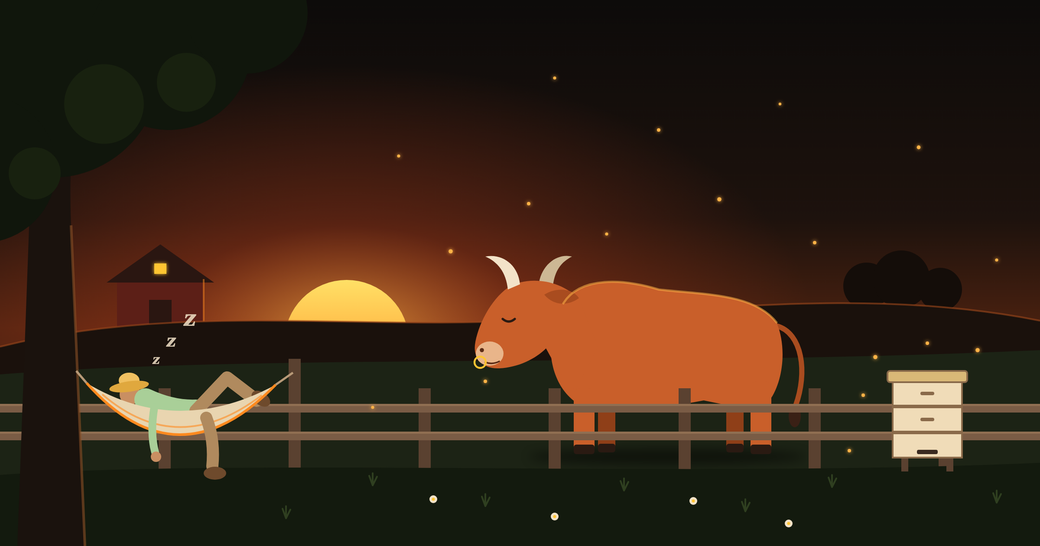
Mike: Yeah, I see a little bit of a split now. There are people that want to review every action AI is doing up front and say, "Yes, you are authorized to do this," before it does it. And then there are people that sort of treat AI as a bull. They don't let him into a china shop. They put him somewhere like a farm, where he can roam free, and you can still get value out of it. You can watch your bull all day. I don't think it's going to be impactful for you. I think it's going to be the same thing with AI. You don't have to be staring at it all day, but you need the right constructs, the right validation, the right harness around it for it to be useful when you need to get close to it.
Molly: You've given me a new fear, that I'm going to be an AI micromanager.
Mike: That's going to be our tagline now. "Don't micromanage your AI."
Molly: Yes.
Mike: I also kind of see it as, I think we're co-working with AI now. We're not using AI as a tool. And you notice it. You show up in the morning and AI has done stuff, and you're checking what it did overnight, or what it did on your projects. It was a nice mind shift for me too, that I'm co-working with these various agents now.
Molly: Yes. We've developed past the point of the overzealous intern that you can give a few things to and need to check every single one, and we're into co-working.
Who takes to AI fastest
Molly: At that individual level, you talked about the spectrum of how people view or treat AI. When you saw individuals adopting both the developer tools you were working on and AI itself, what was the difference between somebody who adopted quickly and got high value versus somebody who didn't? Were there things that were common to the early adopters?
Mike: I think people that worked well in teams, people that are good at delegating, folks that worked with contractors in the past, or folks that had small children that didn't do exactly what they wanted them to do, seem to flourish with AI. I think it might be an expectation thing. It's not always going to do the right task, but it's kind of a fool me once, shame on you, fool me twice, shame on me. You should be able to change your patterns, how you talk to it, what you do to try to get a better result out of it.
Molly: I think for anyone with a toddler that rings very, very true. I tried to get my daughter just to put her shirt on last night for bed, and she said, "Is this the right way?" She was putting her head through the head hole first instead of the bottom. I told her, "No, you have to do it the other way." And then she turns the shirt 180 and is like, "This way?"
Mike: Nailed it.
Molly: "No, you have to do the bottom." And then she just pulls it down and looks at it and is like, "This way?"
Mike: Yep, exactly. But you know, you put her in a rubber room, you give her two hours, and she'll figure it out, if she was AI.
Molly: Exactly. And I need to tell her to give herself input there. Can you review your own work of putting on that shirt and give yourself a few suggestions? If only.
One day ahead
Molly: As we get close to closing out the episode: we still have people, even within software engineering roles, that are very early in the process of using AI, because this adopter curve is just insane in how wide it is. What are the things that you wish somebody had told you at the beginning?
Mike: You only have to be one day ahead to appear really smart to everyone that's one day behind. You don't need to know it all. Just be a little bit ahead.
Molly: Is there anything else you wanted to talk about before we wrap up?
Mike: No, I don't think so. We do have a closed beta right now. Folks can sign up on friendlyai.dev, and as we're spinning up more compute, we're letting more and more people in. Everything works with your Claude or Codex subs. We have free ones, like OpenCode models, too. I'd love for folks to give it a try and start hammering me with feedback on how it's working.
Molly: That's great. We will link it in the show notes. And where's the best place for people to reach you?
Mike: Just mike@friendlyai.dev or linkedin
Molly: Perfect. Mike, thank you so much for being on the podcast.
Mike: Thank you, Molly. It was really nice to catch up.